
Published: November 1, 2026
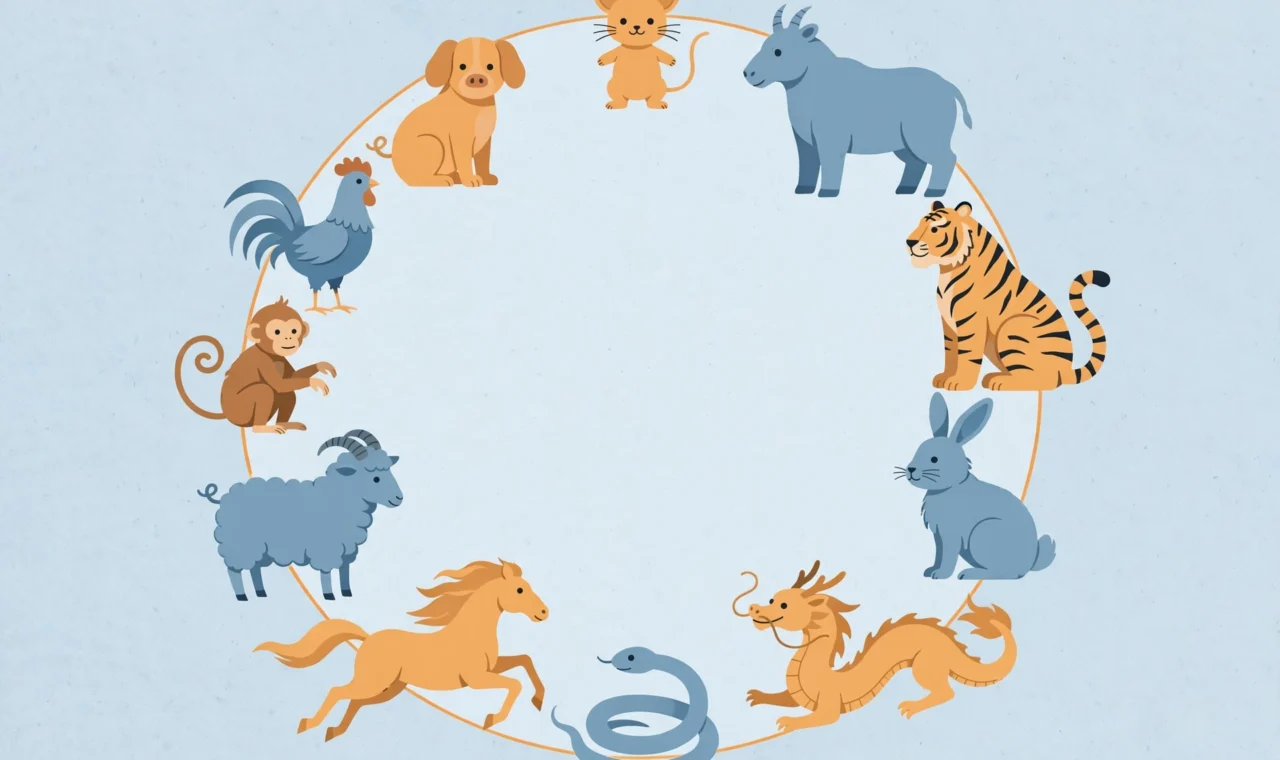
Wondering whether your sign clicks with your partner’s? Chinese zodiac compatibility is the traditional system that rates how well two of the twelve Chinese zodiac animals get along, and it is far more structured than a simple “good match” or “bad match” verdict. The twelve animals are organized into four compatibility triangles called trines, and every animal also has one “opposite” sign sitting six places away on the zodiac wheel.
A word of honesty before the charts: Chinese zodiac compatibility is folklore and cultural tradition, not science. No controlled study has ever shown that birth years predict how happy a couple will be. Treat the tables below as a lens for reflection and a starting point for good conversations, not as a verdict on your relationship.
In this guide, you will find the four trine groups explained, a best-matches table covering all twelve animals, a challenging-matches table covering all twelve opposing pairs, and practical advice for using these charts wisely.
What zodiac compatibility means in Chinese astrology
In Chinese astrology, compatibility is not judged sign by sign at random. It follows two fixed rules that have been used for centuries.
The first rule is the trine: the twelve animals divide into four groups of three, and animals in the same group are considered natural allies. The four trines are Rat, Dragon, and Monkey; Ox, Snake, and Rooster; Tiger, Horse, and Dog; and Rabbit, Goat, and Pig. People born in the same trine are said to share core values and rhythms, so their relationships, romantic or otherwise, tend to feel easy from the start.
The second rule is opposition: each animal sits directly across the wheel from exactly one other animal, six places away. These opposing pairs, Rat and Horse, Ox and Goat, Tiger and Monkey, Rabbit and Rooster, Dragon and Dog, Snake and Pig, are traditionally considered the most challenging combinations, because their instincts pull in opposite directions.
Everything in the tables below follows these two rules. If a pairing looks unfamiliar, check which trine or opposition it belongs to. The logic is always the same.
The four trine groups explained
Each trine is sometimes called a “triangle of affinity.” Animals in the same triangle share temperament and priorities, which is why their pairings consistently top compatibility charts.
| Trine (triangle) | Animals | Shared traits |
|---|---|---|
| The action triangle | Rat, Dragon, Monkey | Clever, ambitious, and socially magnetic. This trio loves achievement, new ideas, and being where the action is. Relationships here are energetic, inventive, and rarely boring. |
| The intellect triangle | Ox, Snake, Rooster | Steady, precise, and hardworking. These three value loyalty, honesty, and doing things properly. Bonds here are built on trust, routine, and quiet mutual respect. |
| The independence triangle | Tiger, Horse, Dog | Freedom-loving, idealistic, and spirited. This group bonds over adventure, strong convictions, and loyalty to their own code. Passion runs high, and so does the need for personal space. |
| The diplomacy triangle | Rabbit, Goat, Pig | Gentle, artistic, and compassionate. These three prize harmony, comfort, and kindness. Relationships here are tender, nurturing, and built around a peaceful home life. |
Notice the pattern: each animal’s two most compatible partners are always its two trine-mates. That single rule generates the entire best-matches table below.
Best matches for all 12 animals
Here is every animal with its top two most compatible signs, straight from trine logic, plus why the pairing traditionally works.
| Your animal | Best matches | Why it works |
|---|---|---|
| Rat | Dragon, Monkey | The Dragon’s grand ambitions get a clever strategist in the Rat, and the Monkey matches the Rat wit for wit, a playful, inventive partnership full of ideas. |
| Ox | Snake, Rooster | The Snake brings intuition and depth to the Ox’s steady loyalty, while the Rooster shares the Ox’s work ethic and honesty, a dependable, orderly team. |
| Tiger | Horse, Dog | The Horse shares the Tiger’s love of freedom and adventure, and the Dog’s loyalty and sincerity ground the Tiger’s intensity with shared idealism. |
| Rabbit | Goat, Pig | The Goat’s creativity and the Rabbit’s diplomacy create a peaceful, artistic bond; the Pig adds warmth, generosity, and easy affection. |
| Dragon | Rat, Monkey | The Rat’s cleverness turns the Dragon’s big visions into results, and the Monkey’s inventiveness makes this a bold, dynamic, fun-loving power pair. |
| Snake | Ox, Rooster | The Ox offers calm loyalty that the private Snake trusts, and the Rooster’s precision and observant nature earn the Snake’s deep respect. |
| Horse | Tiger, Dog | The Tiger matches the Horse’s energy and independence stride for stride, while the Dog brings warm, honest steadiness to the Horse’s lively spirit. |
| Goat | Rabbit, Pig | The Rabbit’s tenderness and the Goat’s creativity make a harmonious, nurturing bond; the Pig adds kindness and a shared love of comfort. |
| Monkey | Rat, Dragon | The Rat and Monkey are two quick minds who never run out of things to laugh about; the Dragon gives the Monkey’s inventiveness a grander stage. |
| Rooster | Ox, Snake | The Ox’s diligence and honesty make this a hardworking, dependable duo; the Snake adds thoughtful depth and refined mutual understanding. |
| Dog | Tiger, Horse | The Tiger shares the Dog’s protective idealism and courage, while the Horse brings warmth and spirit, steady affection with room to roam. |
| Pig | Rabbit, Goat | The Rabbit’s gentleness and the Pig’s generosity build a cozy, family-centered bond; the Goat adds artistry, kindness, and mutual tenderness. |
Challenging matches: the opposing pairs
Each animal has exactly one opposing sign, six places away on the zodiac wheel. Tradition flags these six pairings as the most likely to produce friction, because the two animals’ instincts pull in opposite directions. Read them as friction themes to navigate, not as predictions of failure.
| Pairing | Where the friction comes from | What helps |
|---|---|---|
| Rat × Horse | The Rat plans carefully and guards resources; the Horse acts on impulse and needs freedom. The Rat can see the Horse as reckless, while the Horse can see the Rat as controlling. | Agree explicitly on how much spontaneity, and how much saving, the relationship holds. |
| Ox × Goat | The Ox is pragmatic and emotionally reserved; the Goat is sensitive and needs reassurance. The Ox’s bluntness can wound the Goat, and the Goat’s moodiness can frustrate the Ox. | Name feelings early and soften feedback; steadiness can be a gift when it is gentle. |
| Tiger × Monkey | The Tiger is proud and straightforward; the Monkey is clever and loves to tease. The Tiger may feel its dignity is being mocked, while the Monkey feels bossed around. | Respect each other’s style of humor, and the Tiger’s need to be taken seriously. |
| Rabbit × Rooster | The Rabbit avoids conflict and values tact; the Rooster is direct and freely critical. The Rabbit can feel attacked by “helpful” criticism the Rooster believes is simply honest. | Softer delivery on one side, thicker skin on the other; schedule calm check-ins. |
| Dragon × Dog | The Dragon is grand, optimistic, and prideful; the Dog is cautious and skeptical. The Dog’s worry can feel like pessimism, and the Dragon’s risk-taking can feel unsafe. | Shared goals help: the Dog plans the safety net while the Dragon leads the charge. |
| Snake × Pig | The Snake is private, intense, and slow to trust; the Pig is open, trusting, and sociable. The Snake may feel exposed by the Pig’s openness, while the Pig feels shut out by the Snake’s secrecy. | Allow different paces of trust; the Pig’s warmth usually coaxes the Snake open in time. |
Plenty of lasting, happy couples are opposing pairs. The tradition itself treats opposition as a challenge to work through with awareness, and couples who understand their friction points often communicate better than “perfect matches” who never examine theirs.
How to use Chinese zodiac compatibility
Follow these steps to get a reading you can actually use:
- Confirm both animals first. Use our free Chinese zodiac finder to look up both birth dates: it accounts for the Lunar New Year boundary, which trips up everyone born in January or February. Our Chinese zodiac by birth year guide explains the boundary trap in detail.
- Find each person’s trine. Sharing a triangle means natural affinity; different triangles mean you will need to translate between different temperaments.
- Check for an opposing pair. If you land on one of the six oppositions above, read its friction theme as a discussion starter, not a warning label.
- Layer in the five elements. Each birth year pairs its animal with Wood, Fire, Earth, Metal, or Water, adding a second dimension: a Water sign traditionally nourishes a Wood sign, for example. See the elements section of our birth-year guide for the full cycle.
- Add the Western lens if you like. Many readers enjoy comparing both systems: find your Western sign in our what is my zodiac sign guide and see how the two traditions describe you differently.
Compatibility is a lens, not a verdict
Here is the honest bottom line the tradition itself supports: charts describe tendencies, not destinies. A “best match” pairing still requires kindness, honesty, and effort, and a “challenging” pairing can thrive when both people understand their differences and talk about them openly.
Use Chinese zodiac compatibility the way it was meant to be used: as a starting lens for curiosity about another person, a prompt for better conversations, and a bit of cultural fun. The quality of a relationship is decided by communication, respect, and shared values, which no chart can measure and no animal sign can replace.
Frequently asked questions
What are “secret friends” in Chinese zodiac compatibility?
Beyond the four trines, tradition recognizes six “secret friend” pairings, quiet alliances said to bring steady mutual support: Rat and Ox, Tiger and Pig, Rabbit and Dog, Dragon and Rooster, Snake and Monkey, and Horse and Goat. Unlike trine matches, which sparkle with shared energy, secret-friend pairs are described as calm, loyal partnerships where each partner quietly covers the other’s weaknesses. Many traditional matchmakers valued these pairings as highly as trine matches, especially for long-term stability.
Do the five elements change a compatibility reading?
Yes, the elements add a second layer on top of the animal pairing. Every birth year combines its animal with one of five elements (Wood, Fire, Earth, Metal, or Water) in a 60-year cycle, and the elements follow their own generating cycle: Wood feeds Fire, Fire creates Earth, Earth bears Metal, Metal enriches Water, and Water nourishes Wood. A generating-element pairing (for example, a Water Rat with a Wood Dragon) is traditionally read as extra harmonious, while a controlling-cycle pairing (such as Water dousing Fire) can add friction even between otherwise compatible animals. Two people with the same animal but different elements can therefore have noticeably different dynamics.
Can two people with the same animal sign be compatible?
Traditionally, yes, same-sign pairs are considered workable and sometimes excellent. The logic is simple: you share instincts, so you intuitively understand each other. The catch is that you also share blind spots, so the pairing amplifies both strengths and weaknesses. Two Dogs, for example, are famously loyal together but may reinforce each other’s anxieties; two Tigers must manage competing pride. Same-sign couples are often advised to consciously cultivate the qualities their shared sign lacks.
Does Chinese zodiac compatibility apply to friendships and business, or only romance?
It applies broadly. The trine and opposition system originally described alliances of all kinds: business partnerships, friendships, and family relationships as much as marriages. A Rat-Dragon-Monkey trio, for instance, is traditionally considered a strong founding team for a venture, and parents have long consulted the charts for family harmony. If you are evaluating a business partner or a close friendship, read the same tables with “partnership” in mind rather than romance.
Is compatibility read the same everywhere the zodiac is used?
Mostly, but with one famous exception: in Vietnam, the Cat replaces the Rabbit in the zodiac. Vietnamese compatibility charts therefore pair the Cat wherever Chinese charts pair the Rabbit, so the Rabbit-Rooster opposition becomes a Cat-Rooster opposition, and the Rabbit’s trine partners (Goat and Pig) become the Cat’s. The underlying trine-and-opposition logic is identical; only the animal in that one slot changes. It is a good reminder that these systems are living cultural traditions with regional variations, not fixed laws.
Date and age rules can vary by organization or jurisdiction. For official eligibility or legal deadlines, confirm the applicable rule with the relevant authority.